Story
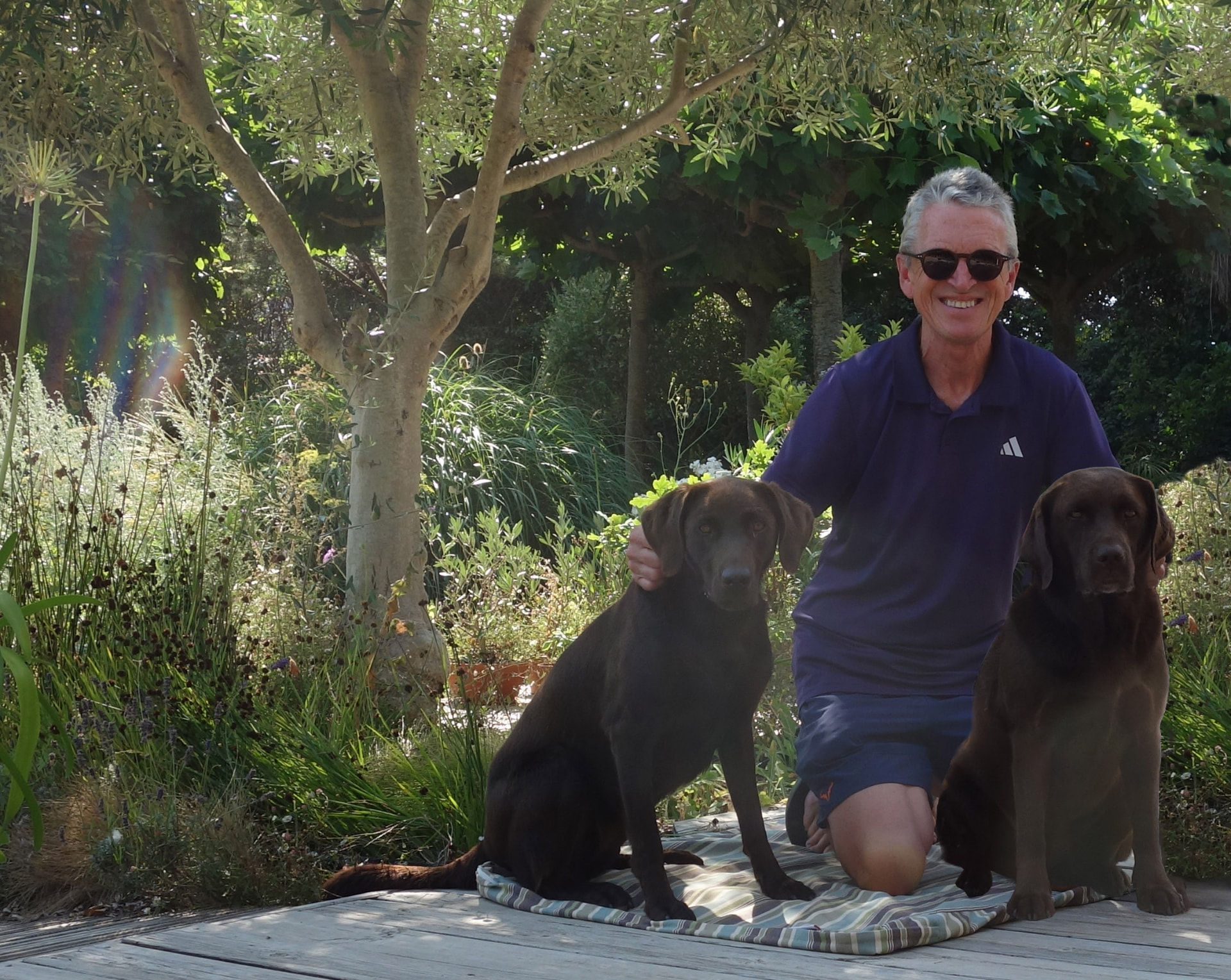
Richard Hutchinson
BSc Dipl Arch, Dipl LCGD Planting Design
I have worked as an architect in the UK for over 40 years, with spells in France and Singapore too. I have always been very interested in how buildings relate to their immediate environment, and especially their gardens for domestic projects.
In mid 2026 I qualified from the London College of Garden Design at Kew Gardens with a Diploma in Planting Design, with a Distinction. As part of the course I studied the latest ideas of planting in gravel or sand as a response to the drier summers and wet winters that we now experience.
A Real Experiment
140 square metres of lawn, transformed.
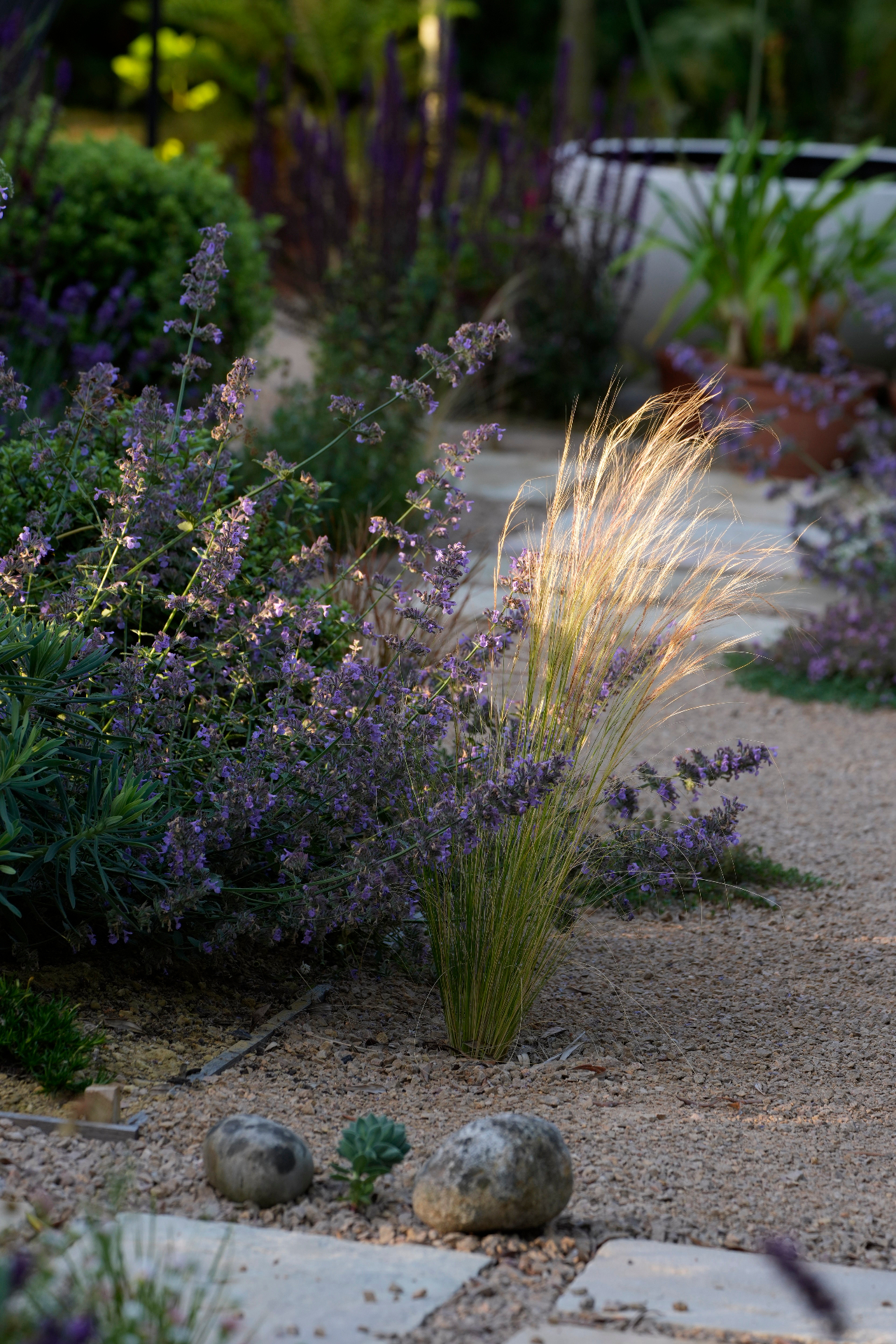
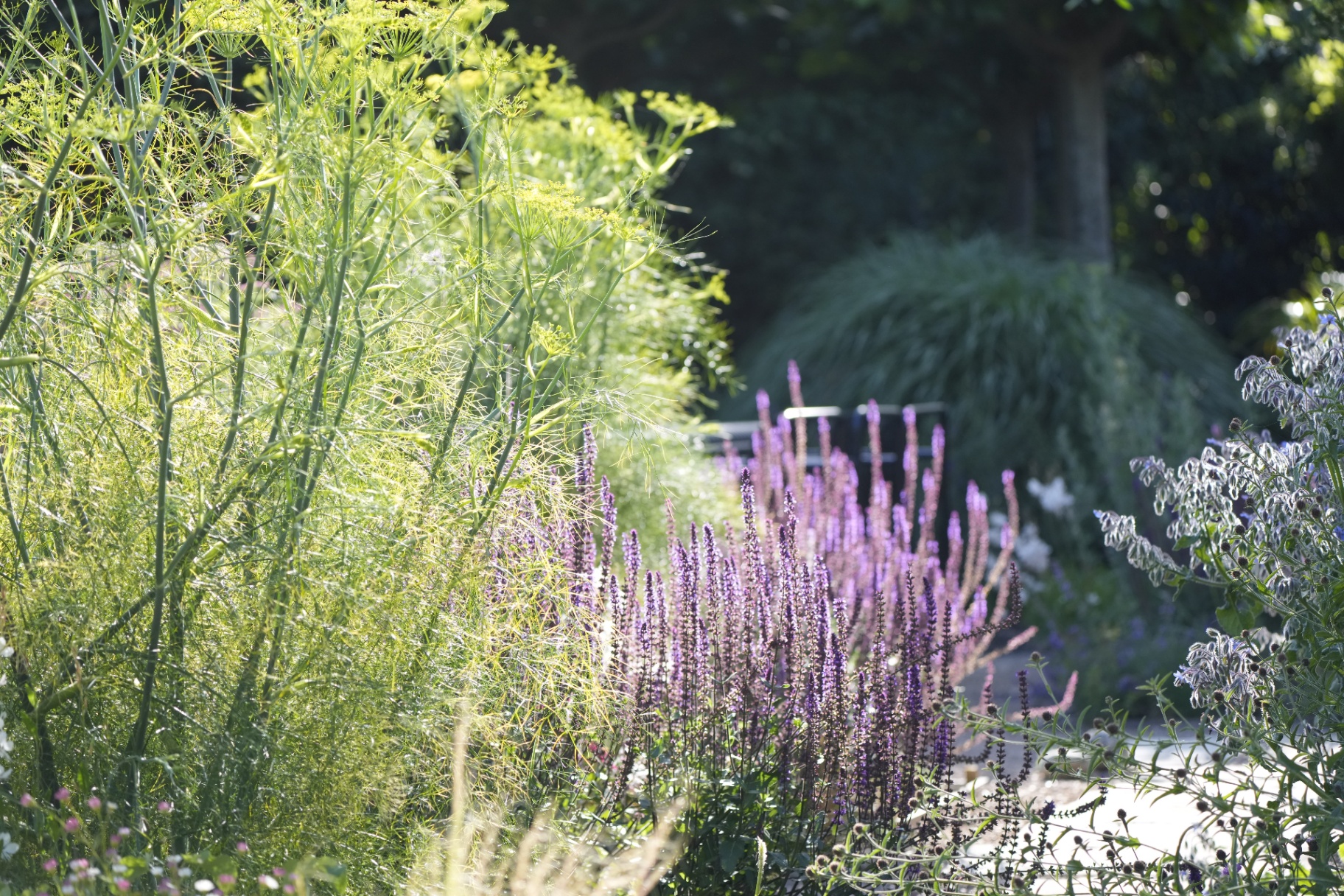
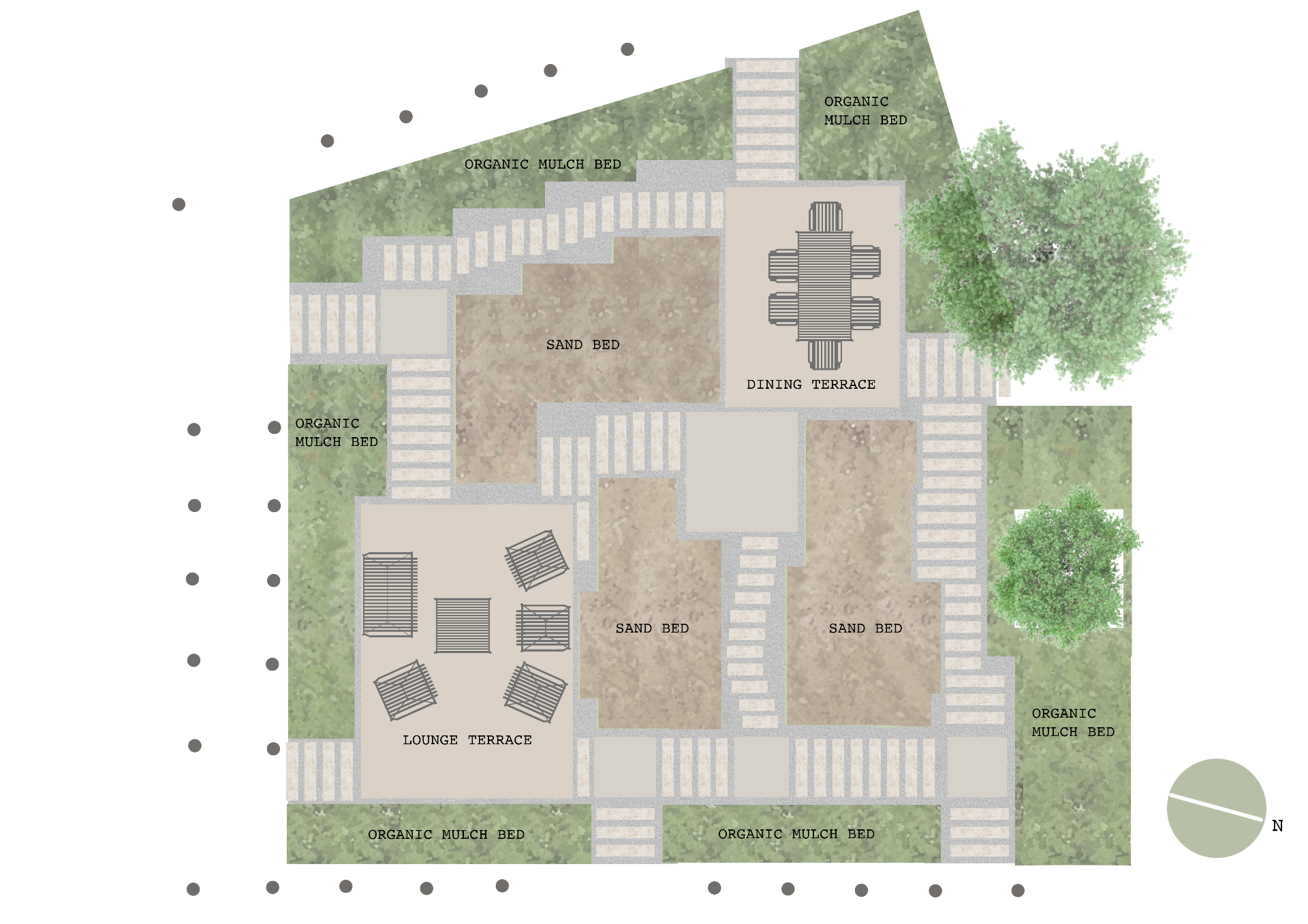
In early 2026, much to the consternation of our dogs, I transformed a lawn of approximately 140m² at our house into a sand and gravel garden, with three sand beds totalling 32m². Gravel paths between the beds also incorporate planting, blurring the edges between beds and paths. Four other perimeter beds which are fairly shaded, totalling 39m², were also created but with an organic mulch of home-made compost.
All of the beds were planted in March and April with plants from 9cm pots or bare root, following a very wet January and February when 290mm of rain fell — twice the normal average of 163mm. All new plants were watered generously when planted. In March, April and May only 70mm of rain fell, half the usual average of 146mm. In May we also experienced temperatures over 30°C, which has continued through June and risen higher into July.
The Result
The difference is astonishing.
The perimeter beds with organic mulch have required regular irrigation from very soon after planting, despite getting less direct sunshine. Plants regularly showed signs of stress in June and July, and some have perished.
In the sand beds and gravel areas, the plants had no additional irrigation until early June when, after weeks of dry weather, they received 30–40 litres of water per bed. Soon after this there was rainfall in early June. Despite virtually no irrigation the plants in the sand beds have thrived — especially achilleas, stachys and salvias — a complete contrast to the perimeter beds.
The difference is astonishing, but really no surprise when you consider that many of these plants originate from the eastern Mediterranean and central Asia, where they grow on rocky, inhospitable terrain with minimal rain in summer. Sand and gravel beds create for them an environment closer to their preferred conditions. The dogs are pretty happy too, there is much more opportunity for different scents, hiding from one another, and watching the greatly increased wildlife!